Mevlâna Celâleddin-i Rûmi (1207-1273)
The year of 2023 was the 750th year of Rûmi's union wth God and was announced as "The Year of Rumi" through out the world.
The Story
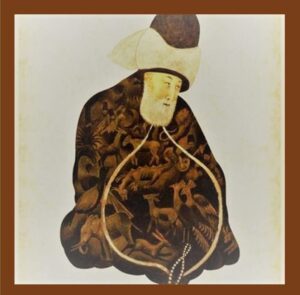 Mevlâna Celâleddin-i Rûmi's family emigrated from Balkh (todays Afghanistan) to Konya (Turkiye), the capitol of the Seljuk Empire, while fleeing from the Mongols, around 1215. An acclaimed Islamic scholar, later renowned as a master (Mevlâna), Rûmi's masterpiece "The Mesnevi", as well as his exquisite poetry and words of wisdom were translated into many languages.
His teachings advocated tolerance, acceptance, reason, goodwill, charity and awareness derived from The Kur'an and the love for God. The Mevlevi Order (known as the whirling dervishes) was later organized by his son Sultan Veled in Konya, around Rûmi's teachings.
Eskişehir Mevlevi Order was founded around 1572. The compound consists of a mosque, a hall for Sema Ceremony, an elementary school (now Kurşunlu Library), dervish cells, ceremonial kitchen (matbah), guest rooms (hanigâh), storage & soup kitchen (imarethâne) and an inn (caravansarai). Kurşunlu Mosque was built in 1525 under the auspices of Mustafa Pasha, grand vizier of Sultan Sulaiman the Magnificient. Mustafa Pasha was known as a Mevlevi and allocated the compound to the Mevlevi Order. The inscription above the entrance of the mosque pays tribute to him.
Eskişehir Mevlevihane was an "âsithane" equipped to train dervishes during their 1001 days of service and seclusion. There were about 140 Mevlevi Lodges across the Ottoman Empire serving until 1925, when all sects and their lodges were closed down by law, after the establishment of the Turkish Republic.
The legacy of the Eskişehir Mevlevihane was revived by the family and descendants of the last Sheik (Bahaeddin Dede) in 2006, as a cultural association and in 2019 as a foundation. 20th line descendant of Rûmi, Dr. Berna Chelebi Şener resides in Eskişehir and is a co-founder and memberof Eskişehir Mevlevihane Culture and Education Foundation. The concept of "Chelebi" implies to the descendants of Rûmi.
With rules of conduct and decorum, Mevlevi Sema Ceremony and its music is one of the most continous traditions of art music in the world and is possibly a unique example, composed for a sacred ritual (Sema Ceremony or Mevlevi Âyin-i Şerifi).